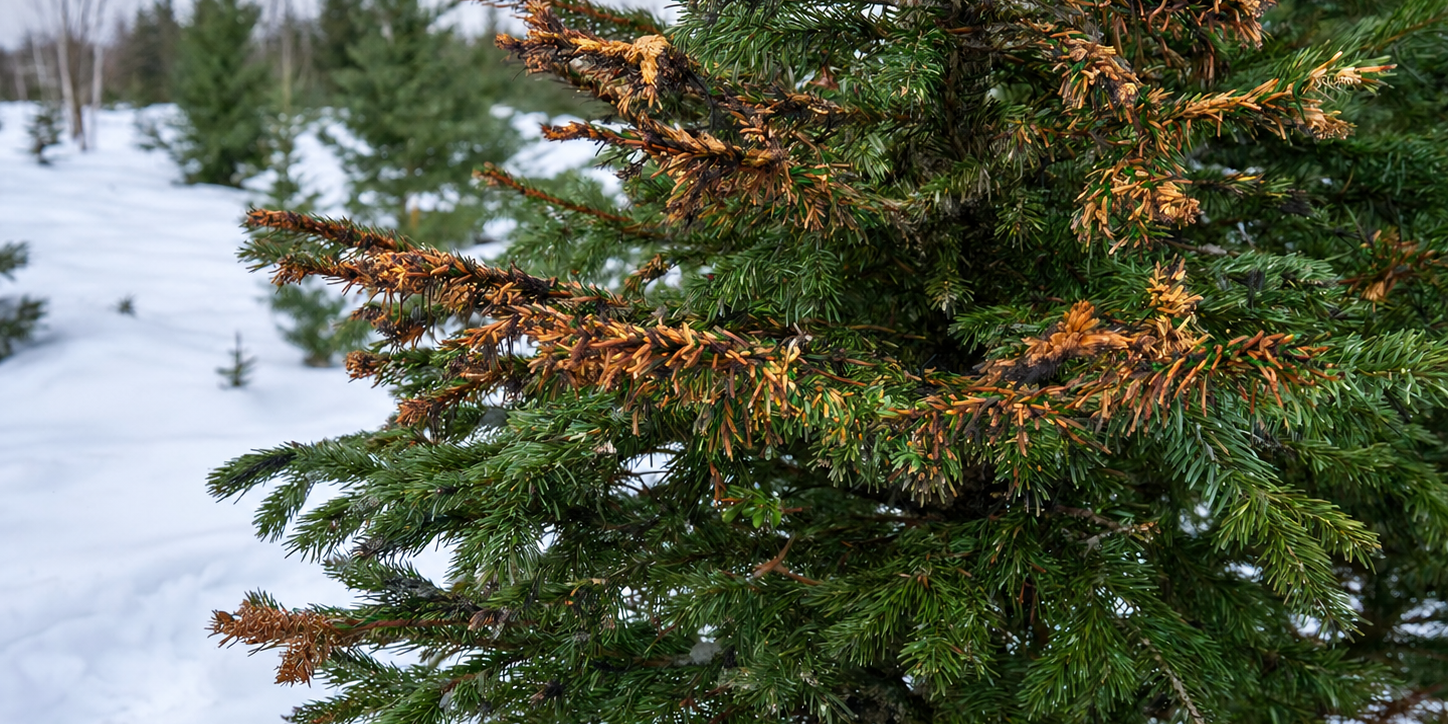
Winter burn on evergreen trees is a common issue for homeowners in Madison and across Wisconsin during the colder months. When evergreen foliage turns brown or desiccation occurs unexpectedly, identifying the precise cause and implementing timely protection measures is essential to maintaining tree health.
Understanding what causes winter burn, recognizing its early signs, and taking preventive measures can help keep your evergreen trees healthy throughout the colder months. In this guide, we’ll explain how to identify winter burn, what causes it, and how to protect your trees in Madison, WI.
What Is Winter Burn?
Winter burn is drying damage, not a disease. Evergreens keep losing moisture through their foliage all winter, but frozen roots can’t replace it, so the foliage dries out and turns brown.
The surprise for most homeowners: the injury happens in winter, but you won’t see it until the snow melts in March and April. Late winter is often the riskiest stretch in Madison, when bright sun warms the needles while the soil stays frozen.
Signs of Winter Burn on Evergreens
- Browning from the tips inward: Damage starts at the branch tips and spreads toward the trunk.
- One-sided damage: The south, southwest, and west sides take the most sun and wind, so they usually look the worst.
- A clean “snow line”: Branches buried under snow often stay green while everything above browns.
- Scorched leaf edges: Broadleaf evergreens like boxwood, holly, and rhododendron brown along the leaf margins first.
- Needle drop in late spring: Damaged needles fall as new growth fills in.
Around Dane County, it shows up most on arborvitae, yews, junipers, boxwood, dwarf Alberta spruce, and white pine.
What Causes Winter Burn in Madison?
- Dry fall soil: Thirsty trees enter winter with no reserve.
- Frozen ground and winter sun: Foliage loses water on sunny days, but the roots can’t replace it.
- Drying winds: Open lots and newer subdivisions in Sun Prairie and Verona take the full force of northwest winds.
- Road and sidewalk salt: Plow spray and salty snow piles pull moisture out of plants, especially terrace trees and shrubs along driveways.
- Weak or young roots: New plantings and trees in compacted soil can’t take up water efficiently.
- Late-season pruning or fertilizing: Both push tender new growth that doesn’t harden off before the cold arrives.
Is It Winter Burn or Something Else?
Most online guides skip this, but not every brown evergreen has winter burn, and treating the wrong problem wastes money.
- Normal fall needle drop: Pines and arborvitae shed older interior needles every fall. If the tips stay green, your tree is fine.
- Rhizosphaera needle cast: This fungal disease browns or purples spruce needles starting at the bottom of the tree and moving up, the opposite of winter burn. Look for rows of tiny black dots on the needles.
- Spider mites: These pests leave foliage speckled or bronzed, often with fine webbing.
- Salt injury: Browning concentrated on the side facing a street or driveway points to salt, either alone or on top of winter burn.
If you’re not sure what you’re looking at, our certified arborists can diagnose the cause before recommending any treatment.
Checklist for Winter Burn Protection for Evergreens this Winter
- Water deeply until the ground freezes: In Madison, that’s usually late November or early December. Use a soaker hose around the drip line.
- Mulch the root zone: Spread 2 inches of wood chips or shredded bark on clay soil, or up to 4 inches on sandy soil, out to the drip line. Keep mulch a few inches away from the trunk. Our free wood chips are perfect for this.
- Use burlap screens, not tight wraps: Staple burlap to stakes on the south and west sides, leaving the top open. Tight wraps trap ice against the foliage.
- Keep salt away from evergreens: Shovel salty snow away from beds, try calcium magnesium acetate instead of rock salt, and flush the soil with water in spring.
- Be careful with anti-desiccant sprays: They can help boxwood and rhododendron, but some products injure arborvitae or dull Colorado blue spruce, so ask an arborist first.
- Skip fall pruning and fertilizing: Leave brown branches alone until spring, and save structural tree pruning for the dormant season.
- Plant smarter next time: Put new arborvitae, yews, and boxwood on the east or north side of your home, away from wind tunnels and plow spray.
How Eco Tree Company Helps Your Evergreens This Winter
Winter is a great time for a Tree Doc visit. With the leaves gone, our certified arborists can easily spot weak branches and evergreens at high risk. We’ll handle dormant pruning, cabling, and a tree risk assessment for snow-loaded evergreens.
If you use our snow removal service, let us know which beds to keep clear of salty snow piles. Come spring, we can follow up with root and soil remediation for trees that struggled through the season.
Schedule a free consultation with one of our Tree Docs, and we’ll help your trees come out of winter strong.